Creating a ‘Piece of Home’

This article appears in the Fall 2026 issue of the Dominican Magazine.
Return to the Table of Contents.
The lilting voices of the choir carry across Rosary Chapel.
“Envía tu espíritu, sea renovada la faz de la tierra.”
That call to the spirit, seeking renewal, rings through the Mass of the Holy Spirit, a tradition in Catholic higher education, welcoming the new academic year with gratitude and prayer.
Spanish mixes easily with English during this special service, much like it does in the chapel each Sunday during weekly Mass.
“To be able to pray in your own native language is an essential part of faith and how faith is celebrated,” notes Andrew Mercado, Dominican’s director of University Ministry. “The opportunities we create for students to sing the songs they have sung growing up in their parishes or to pray as they do at home makes the experience of Dominican that much more transformative.”
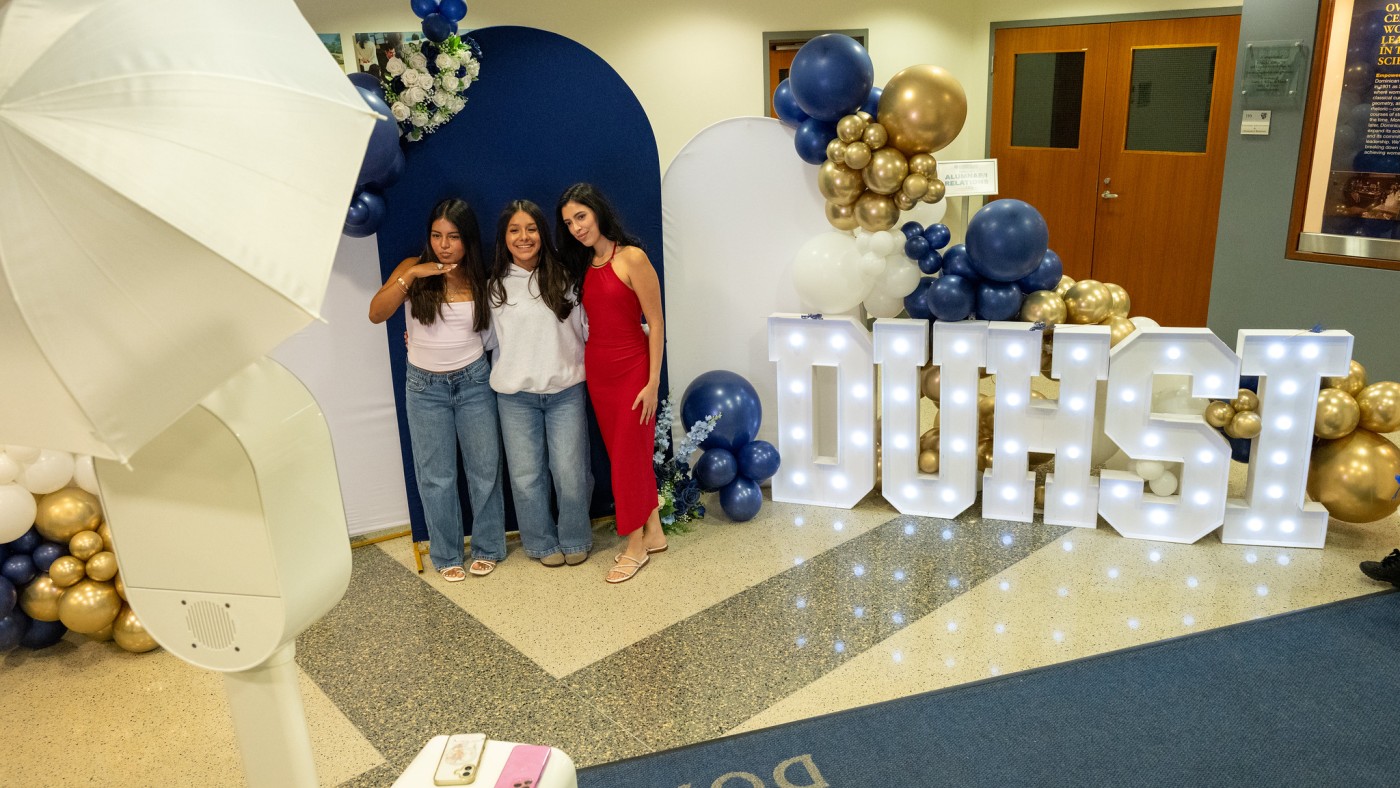
With a rich history of making higher education accessible to the children of immigrants, Dominican marks its 15th year as a federally designated Hispanic-Serving Institution (HSI) in 2026. It’s an identity that is celebrated and highly visible in a multitude of ways across the university, beyond bilingual Catholic Masses.
Since earning its HSI status in 2011, the university has grown to a nationally recognized model for equitable student success. Grounded in the Catholic, Dominican tradition, DU strives to approach the needs, strengths and lived experiences of all students.
“Being Hispanic-serving means centering not just the needs, but also the lived experiences of our students who are coming from a Hispanic/Latinx background,” said Jacky Neri Arias, assistant vice president for Government Relations and HSI Strategy at Dominican University.
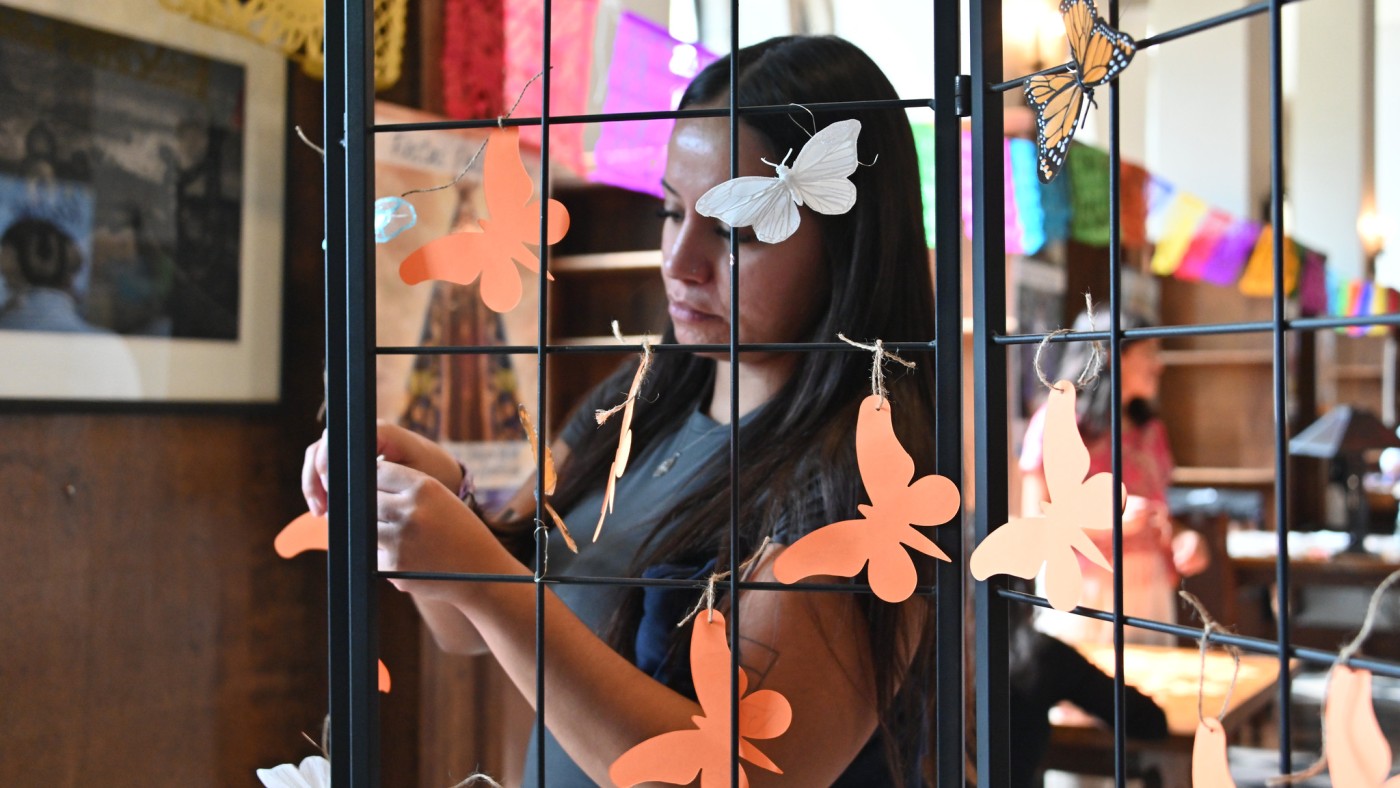
That means the creation of spaces, programs, services and academics that are culturally sustaining and intentionally woven into student life at DU. This approach, rooted in DU’s practice of accompanying students on their academic journey, is also a catalyst to support students of other backgrounds, university leaders believe.
“When you serve the most marginalized, you are serving everyone,” Neri Arias said. “While it’s about centering Hispanic students, it’s certainly not excluding students from other backgrounds.”
Colleges and universities gain HSI designation when at least 25% of full-time students are Hispanic. At Dominican, over 70% of undergraduate students identify as Hispanic, an increase of roughly 7 percentage points from just five years ago.
Improving Educational Outcomes
The clearest indication of the university’s transformative impact as an HSI can be showcased through the success and equity gains of its students.
University leaders credit culturally sustaining programming, targeted advising practices and effective use of federal funding available to HSIs as drivers for that progress. These measures have strengthened student retention, grown graduation rates, fostered a greater sense of belonging and improved career readiness for students of all backgrounds. They have also produced outcomes that consistently surpass both state and national averages.
For example, 78% of first-year students return to DU for their sophomore year, tying the university for the highest retention rate among HSIs in Illinois. The statewide graduation gap between Hispanic students and white students in higher education is 17%, but, at Dominican, it is just 7%.
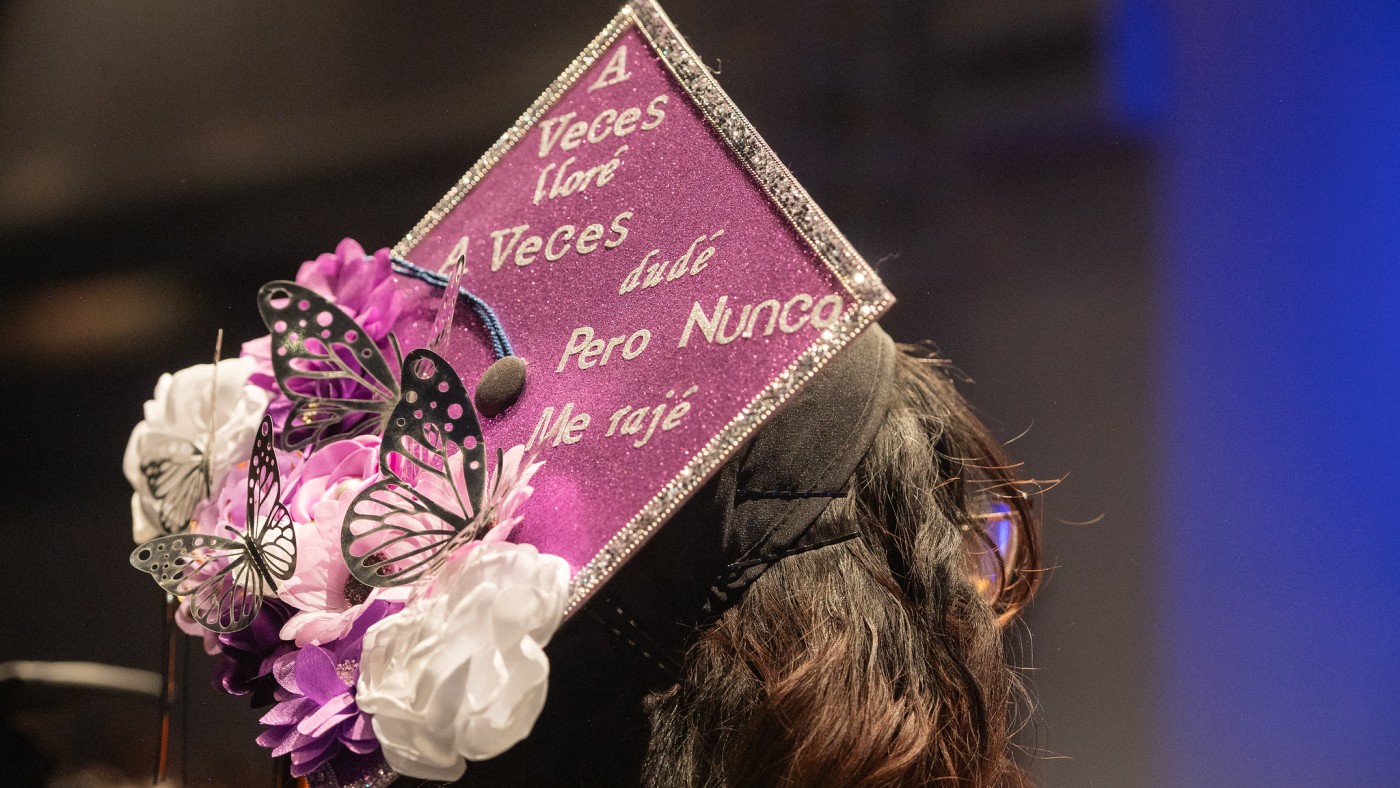
Hispanic identity and themes are embedded in DU’s curriculum. Within the Rosary College of Arts, Education, and Sciences, students can take a course in Latine Literature, study the history of Chicago’s Latine communities and discover how women’s wisdom and voices in faith form “Abuelita Theology.”
“Our curriculum is deliberately designed to reflect the identity of our student body, offering courses that honor the rich cultural traditions and lived experiences students bring to our campus,” said Dr. Sheila Bauer-Gatsos, interim dean of RCAES. “This is a curriculum from which every student benefits, regardless of identity or background, and it helps to prepare them for the culturally diverse world in which they live and work.”
Dominican’s career-readiness framework, requiring internships for all students, has helped the university to rank third in the Midwest for improving students’ social mobility, according to U.S. News and World Report’s annual college rankings.
One notable new way that DU is using its Hispanic-serving identity to serve students of all backgrounds is through the CHARISM alliance, a partnership with three other Catholic, Hispanic-Serving Institutions in the U.S. and Puerto Rico.
The alliance aims to develop high-impact student experiences, new education pathways, faculty collaboration, joint research, cross-registration opportunities and shared co-curricular initiatives. Additionally, its purpose strives to unite institutions across geographies, cultures and languages to expand opportunities for students, amplify Catholic identity and serve as a national model for educating concerned and enlightened citizens of the global community.
“Through CHARISM, our students are able to experience four times the curricular HSI focus,”” said Dominican University Provost Dr. Mia Hardy.
A Culturally Sustaining Campus Where Students ‘Feel Seen’
Dominican’s HSI identity is a lived experience woven into every facet of student life—and it’s the driving force behind intentionally designed spaces, staffing and teaching practices that create a more inclusive community around campus.
The Center for Cultural Liberation (CCL), launched in 2020, is just one of many efforts by DU to build programming that is culturally responsive, and is, at its core, another expression of Dominican’s HSI identity.
Visitors to the CCL are greeted with a splash of bright colors as they arrive at a space built for students, by students. It’s also a place where students can create events and gatherings “around joy and community,” says Associate Director Yessy Hernandez ’21, MSW ’22.
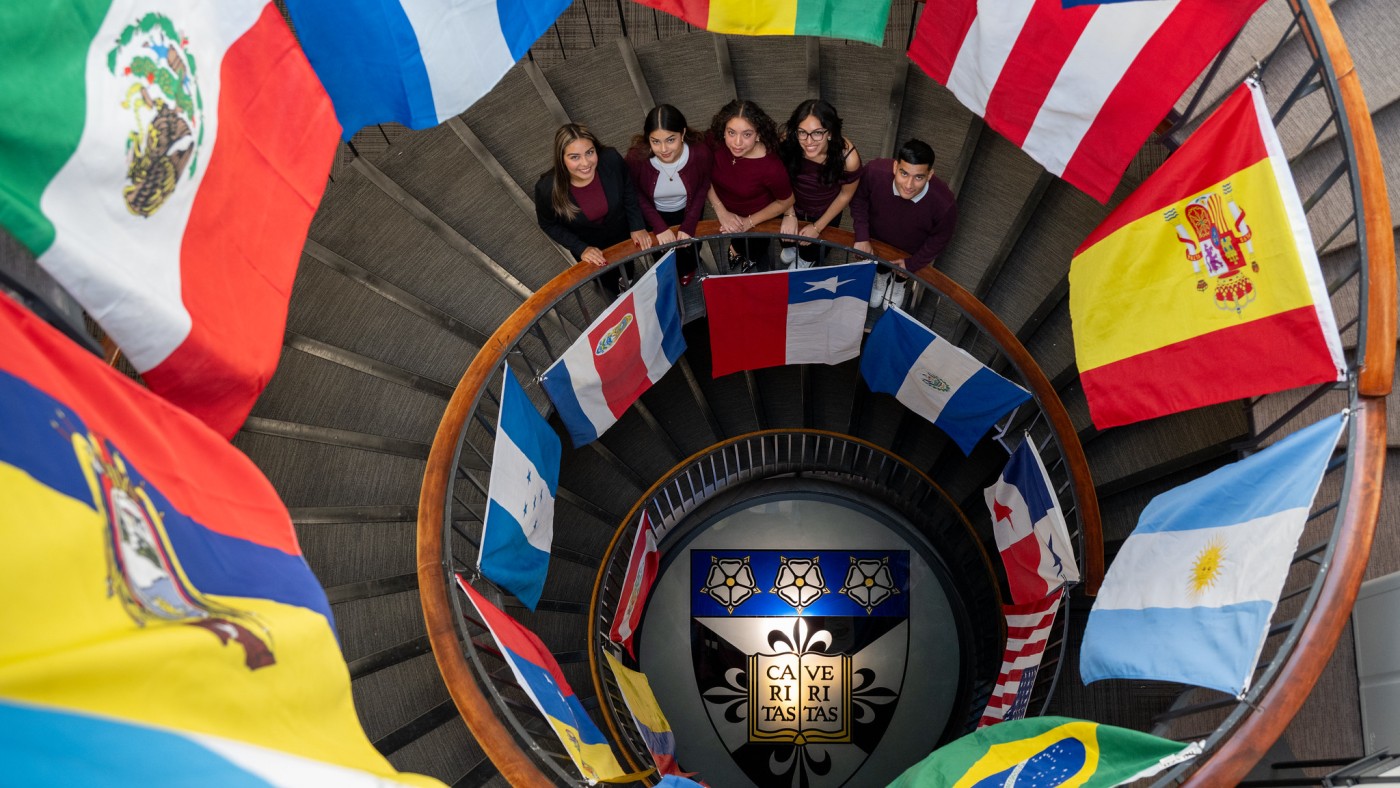
With a mission to “retain, support and celebrate students from historically marginalized backgrounds,” the CCL originated as an idea from students who called upon university leaders to provide supportive spaces for students of color.
Today, the CCL hosts programs, activities and events that are open to all students and represent diverse interests, cultural backgrounds and identities.
“There’s been a much heavier, intentional effort to be more culturally responsive to our students,” Neri Arias said. “Our students are not just wanting events where there is pizza and soda. They want something that is going to help them develop their cultural identity as leaders, as participants and as creators.”
Added Hernandez: “We uplift Latine identities, but we don’t center only Latine identities. The idea is, where can we find intersections?”
One example is the creation of Family Academy, which began as a Spanish language CCL program for families of incoming students, but transformed to help all first-year families feel welcomed and involved in the student experience, she noted.
Creating centers of belonging and advancing student-centered strategies and initiatives are crucial reasons why a recent university survey found that 85% of Latine students feel a “strong or moderate” sense of belonging at Dominican.
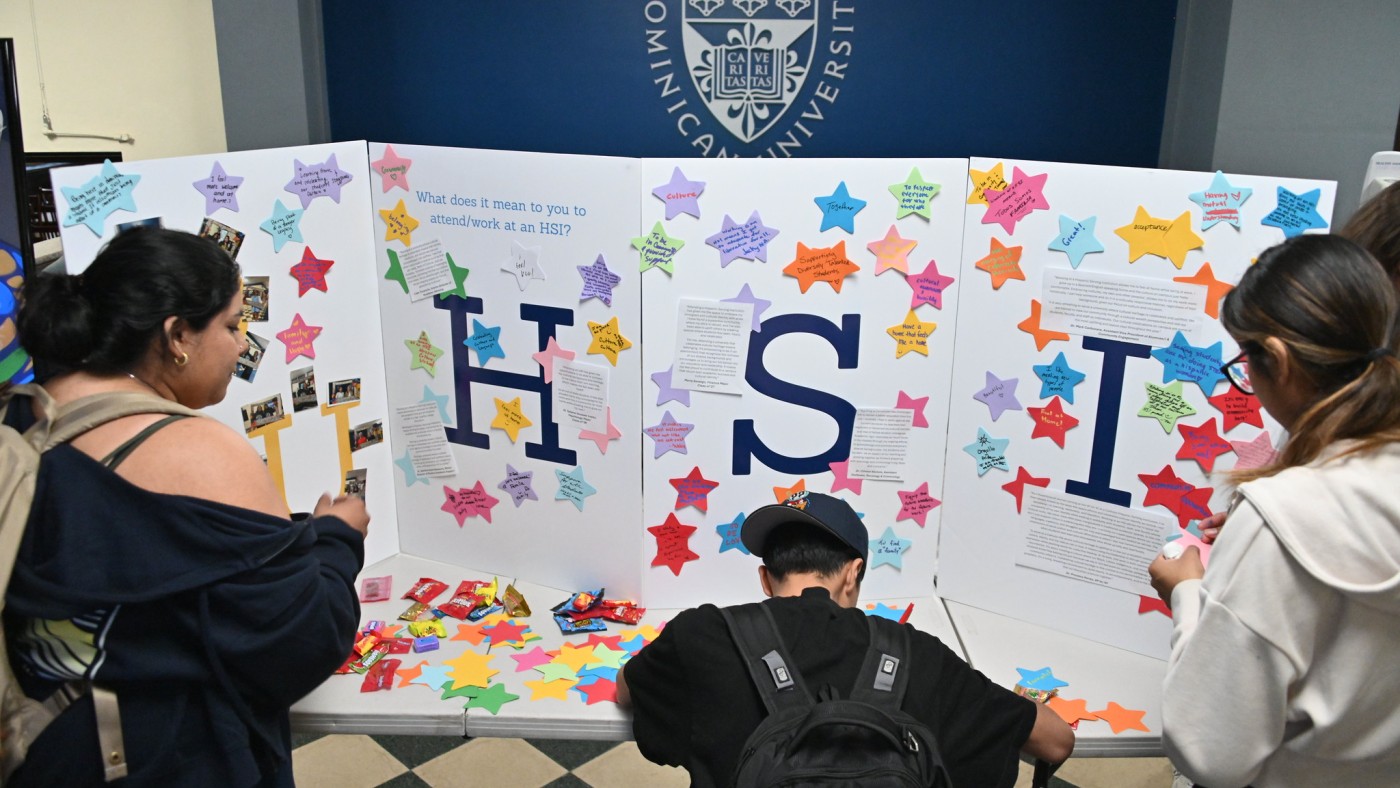
“Academically, just having staff and professors who understand what it means to be Hispanic in college has been really impactful for me,” student Daniela Funes Rivera said. “During my first year, my professor knew my immigrant story and how that impacts my academics. And then, through programming and speakers on campus, I’m able to relate my lived experience to others’ lived experiences.”
Similarly, David Campos, a junior biology major who recently completed whooping crane research at the Smithsonian-Mason School of Conservation, said he was drawn to the feeling of community at Dominican.
“Being in a place that reaffirms who you are and the identity you have definitely helps in building your confidence for standing your ground in places where you may be a minority in a sea of people,” he said. “Dominican makes me feel very comfortable with who I am. I definitely feel seen there. When I go somewhere and I’m not [feeling seen], I think, ‘Wow, this is so out of the norm for me!’”
Embracing Faith Traditions
Once a year, images of the Virgin Mary, as she is represented across Latin America, line the Noonan Reading Room.
It is Fiestas Patronales, one of several cultural celebrations that University Ministry hosts to connect students to Latine Catholic heritage.
“When I have a student walk in and see the patroness of their particular country, you can see how moved they are,” Mercado said. “It’s a piece of home we’re trying to bring to campus.”
University Ministry focuses on connecting students to the faith traditions they know, while giving students of other backgrounds a window to a new world.
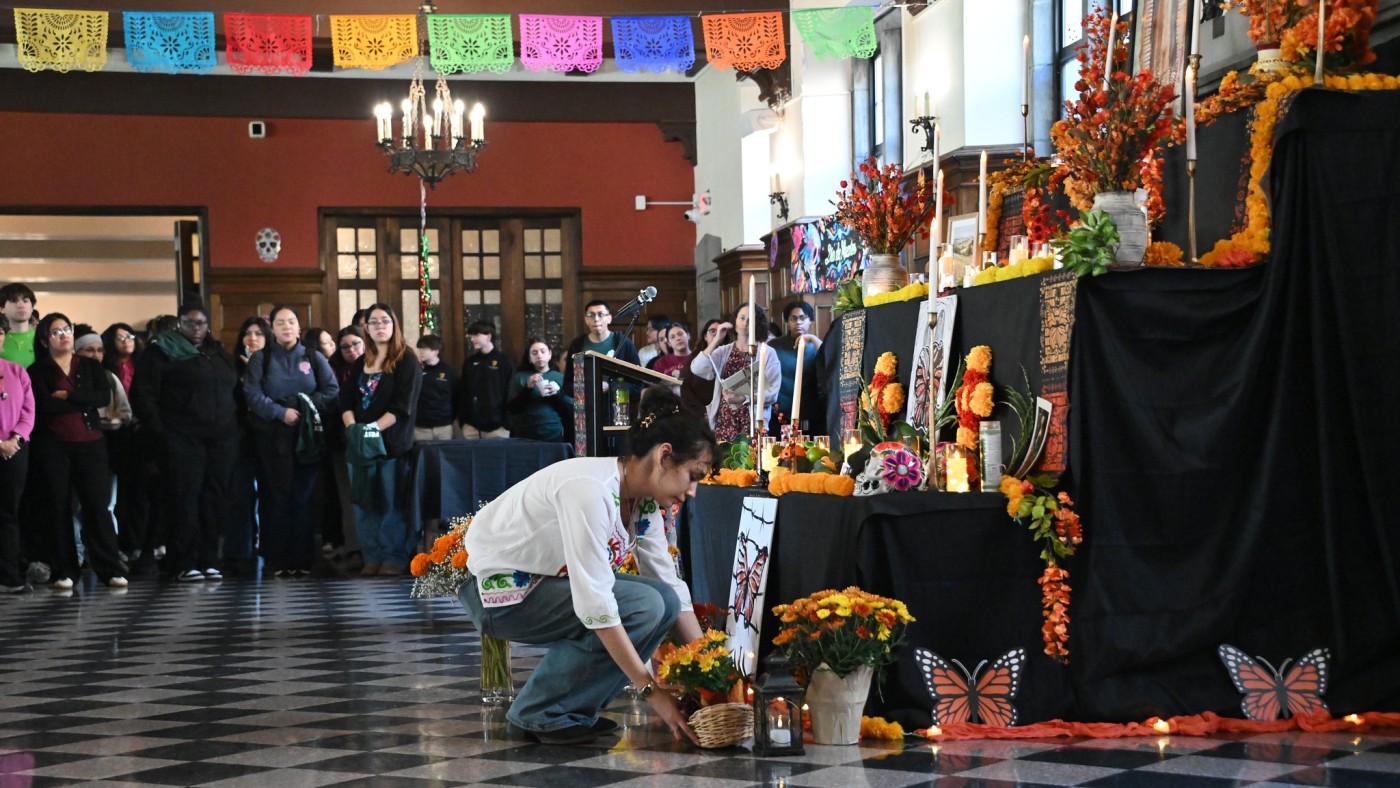
During Día de los Muertos, a Mexican festival honoring the dead, crowds of students, faculty and staff from all backgrounds gather to hear mariachis play and to watch the blessings of the various ofrendas, or altars, created by students around campus.
Before Christmas, a procession of musicians, singers and two students portraying Mary and Joseph makes its way through campus in celebration of Las Posadas.
Ministry en lo Cotidiano (Ministry in the Everyday) offers students faith-based service opportunities in Latine and other traditionally underserved communities. And the PASOS Network was created to form a nationwide community of Catholic institutions of higher learning sharing how they practice culturally sustaining ministry. Every two years, a conference is held at DU.
“The Catholic component of HSIs, Catholic social teaching, is at the heart of the work we do at Dominican,” said Armando Guerrero Estrada, PASOS Network director. “We are not just here for academics. We are trying to form our students, faculty, staff and administrators in a holistic manner and one that is rooted in the dignity of the human person.”
The ‘Go-to Catholic HSI’
Dominican’s HSI work across departments is not just making a difference on campus for all students. It’s also getting noticed by the university’s peers—and earning national recognition.
“We’re now the go-to Catholic HSI,” Guerrero Estrada said. “Folks are drawn to us, becoming members of the PASOS Network because they want to learn how to implement culturally sustaining practices on their own campuses.”
Providing students with a transformative education and demonstrating efforts to boost student success also earned Dominican the prestigious Seal of Excelencia, from Excelencia in Education for the 2026-27 academic year.
In earning the Seal, Dominican University joins 45 “trend-setting colleges and universities from across the country that are ensuring America’s future through their steadfast commitment to develop and advance the talents of Latino, and all, students.”
Representatives from Excelencia, a Washington, D.C.-based nonprofit organization founded in 2004 that accelerates higher education success for Latine students, lauded Dominican for its “intentional institutional focus on advancing Latino, and all, student success by aligning data and practice” and its “deliberate and ongoing assessment to identify and implement strategies throughout your institution that improve Latino, and all, student achievement.”
Additionally, Dominican earned high regards for the university’s “long-term and unwavering commitment to intentionally serve Latino students, while serving all.”
“We are deeply honored to earn the Seal of Excelencia as we mark 15 years as an Hispanic-Serving Institution,” said Dr. Genaro A. Balcazar, Dominican’s chief operating officer and senior vice president. “Being an HSI has always been so much more than a designation for Dominican. It has influenced who we are, how we serve our students and how we understand our place in the broader community.
“We are committed to building on this foundation by continuing to deepen our impact and serving as a national model for what intentional, student-centered excellence looks like.”
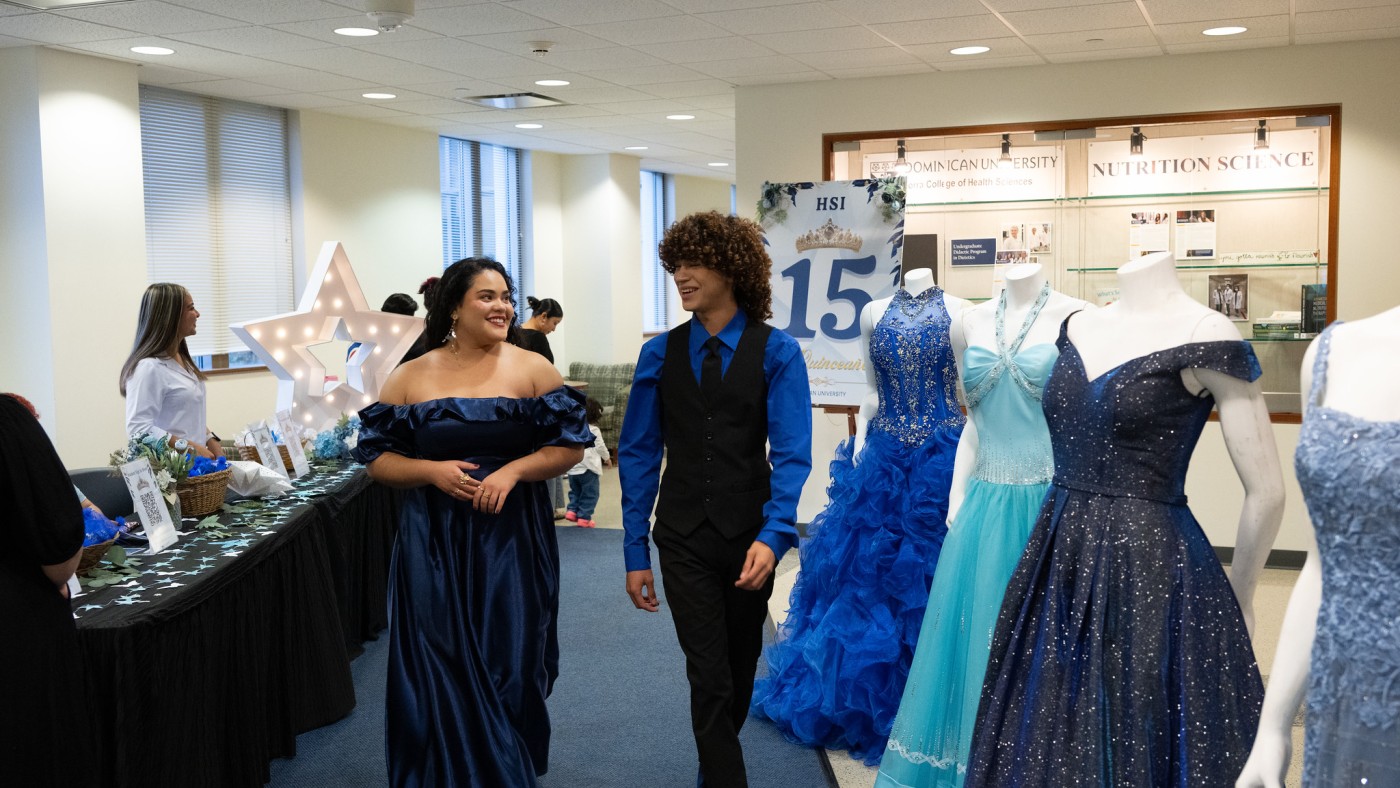
To celebrate the 15th anniversary, a Quinceañera, the traditional Latin American celebration marking a girl’s 15th birthday, was held this fall.
“It’s an amazing reason to have a Quinceañera,” said Funes Rivera, who created invitations for the event. “When you have a Quinceañera, it’s like stepping into a new phase in your life. I can’t wait to see what’s next for Dominican and how we can keep growing as an HSI.”