Alumnae/i Through the Decades

This article appears in the Fall 2026 issue of the Dominican Magazine.
Return to the Table of Contents.
As Dominican University marks its 125th anniversary and looks back on its past, we highlight six notable alumnae/i who have made a mark on our history.
1960-1969
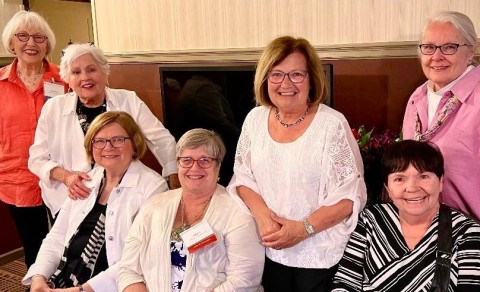
The Class of 1968: Reconnecting and Staying Engaged
They call themselves the ’68 Posse.
It’s a name born from “rounding up classmates” for their 50th class reunion in 2018, jokes Carol Anderson Kunze.
More accurately, it’s a moniker describing the tight-knit community of friends who came together to create a memorable college reunion and then just decided to keep planning meet-ups—through Zoom check-ins, the occasional in-person lunch and at DU Reunion.
“When we came back together [for our 50th] it was like we never said goodbye,” noted Donna Renn, former class president.
“During the time we were at Dominican, it was an extremely interesting time in history,” added Marilyn Freehill Jancewicz, a member of the Alumnae/i Leadership Council at DU.
Women’s roles were evolving, the Catholic Church was undergoing great change and the war in Vietnam was igniting activism, Marilyn said.
“Whatever unique experiences a group has can be used to bring them back together, I think,” she said.
Donna noted that the Class of ’68 itself was also distinctive in terms of the careers the female students pursued.
“Two of our classmates ended up in the CIA, and we had a couple of lawyers, which was highly unusual during that time,” she said. Careers in fi nance, corporate leadership, technology and other fi elds that had been traditionally male dominated were also undertaken by Posse members.
The Sinsinawa Sisters were the motivators to pursue a new kind of future, Donna said.
“We were taught by women who were highly educated, served as role models and encouraged us to think in ways that women were not encouraged by the general society to think,” she said.
Through the creation of the Class of ’68 Golden Jubilee Scholarship and the ’68 Study Abroad Scholarship, class members actively support the Dominican University students of today. They also remained engaged with current events at DU and are eager to learn about future-focused initiatives under development.
“Coming back to campus is always a great experience because of the way the school has changed,” said Suzanne Engle, class agent. “And these changes are for the better.
1970-1979
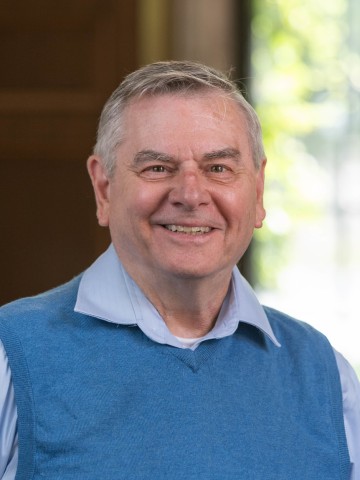
Tom Poro: Going First (to a Newly Co-ed Rosary)
When Rosary College transitioned to a co-ed institution, there were some minor wrinkles, Tom Poro ’72 discovered.
“There was no locker room for men,” noted Tom, one of the first male students on campus. “I had to take a gym class, and I think that caught them off guard!”
But Tom’s time at Rosary was overwhelmingly positive—so much so that his younger brothers, Dan Poro ’76 and Larry Poro ’81, followed in his footsteps by enrolling as well.
“I loved the good liberal arts education because I was able to balance my science courses with psychology and a couple of theology courses too,” Tom said. “I tried to make myself well-rounded, to be open to a lot of other thoughts.”
A transfer student, Tom was introduced to Rosary College through a neighbor who was a Rosary recruiter.
“We had a good time while students,” Tom said of the handful of men who enrolled that first year. “We were all commuters, so we would congregate in the Grill in the basement. We were like kindred spirits.”
Tom, a biology major, also found himself enjoying his chemistry courses taught by Sr. Alice Hudson, OP, and Sr. Mary Woods, OP.
“They were very knowledgeable and very dedicated women in their fields,” he recalled.
Tom went on to work in the chemistry fi eld, ultimately taking a job as a chemist with the Chicago Northwestern Railroad after learning about the position from none other than Sr. Mary Woods. This would lead to a long career with the railroad, including roles in marketing and finance.
But Tom acknowledges that his greatest gift from Rosary College was meeting his wife, Margaret “Meg” Hartranft ’77, during a ballroom dance class the campus hosted after he had graduated.
“The best things happen while you’re dancing,” Meg said during a 2022 interview with Dominican University’s McGreal Center.
1980-1989
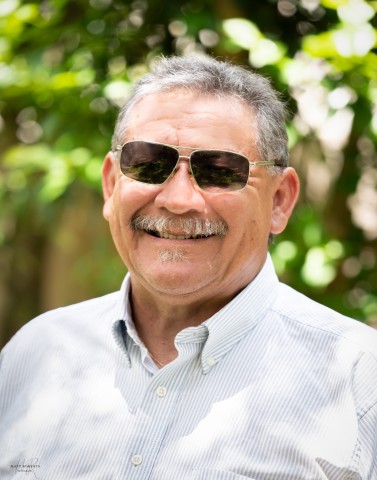
Gil Ruiz: Offering Unconventional Outreach
When Gil Ruiz ’85 entered Rosary College, he wasn’t a traditional college student.
Gil had already completed eight years of service in the U.S. Navy and was married with two young daughters, living in Oak Park. But thanks to GI Bill benefi ts, Gil decided to return to school, ultimately choosing Rosary and earning a bachelor’s degree in business administration.
“I was very fortunate that Rosary had a program and a place for an older student like me, who had been out of school for so long,” Gil said. “It was strictly an academic environment, which is what I needed.”
Gil’s degree took him in many impactful directions. He has worked in human resources, housing and urban development, employment services and older adult services. While in an HR leadership role with the state of Michigan prison system, Gil was responsible for connecting employees with substance use disorders to treatment services.
“Because I had established a good rapport with employees, they confided in me,” Gil said.
This ability to help, combined with personal experience of growing up around alcoholism in his home, sparked Gil’s interest in conducting outreach beyond his HR office. Today, Gil is a community volunteer who speaks to individuals with substance use disorders and helps refer them to resources that will aid in their recovery. He does this in partnership with his wife, a physician.
Gil says many people struggling with addiction are wary of “professionals,” and are more comfortable talking to a layperson like himself.
“One of the things I found is that I have an ability to connect with people who do not trust anybody,” he said.
This compassion and drive tie Gil back to his time at Rosary.
“Caritas Veritas says it all for me,” he noted. “I believe in that—doing for others in a truthful way, without any self-gain.”
1990-1999
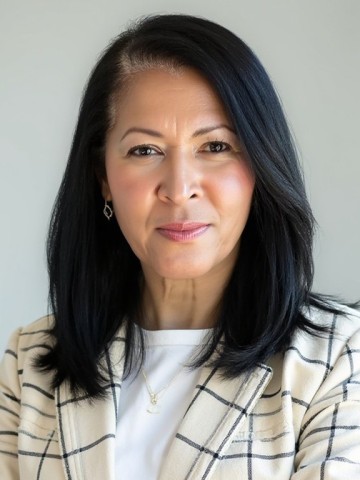
Cheryl Carron: Leading with Grace
Executive leadership roles in commercial real estate and a commitment to community service earned Cheryl Carron ’91 a spot on the Top 50 Women Leaders of Milwaukee for 2025.
Women We Admire, the local organization behind the honor, applauded Cheryl’s decades-long volunteerism with the United Way of Greater Milwaukee and Waukesha County, including 10 years as a board member; her service on the executive board of the Milwaukee Ballet; and her leadership with JLL Milwaukee Real Estate. At JLL, she is employed as chief operating officer for management visions in the Americas and president of JLL’s healthcare division.
“I’ve been fortunate to receive wonderful recognition throughout my career, but this one was really special,” Cheryl said. “It means a lot to know that there are people who believe you’re leading with grace and with others in mind, not just yourself. I’ve had a lot of leaders who have helped me on my journey, and it’s been my greatest gift to bring others along on mine.”
Balancing two leadership positions within JLL ensures there is “never a dull moment,” Cheryl acknowledged.
“It keeps you on your toes because you have to be adaptable,” she noted.
Cheryl, who studied communications, accounting and business administration at Rosary College, said she learned from professors who gave students honest advice about the challenges they would face in the workplace.
“The professors who made an impact on me were the ones who shared real, practical experience,” she said. “That continues to carry me through to today.”
Rosary also introduced her to the value of diverse perspectives, Cheryl said.
“We were all one unit, one community,” she recalled. “I felt every voice was heard. Appreciating the diversity of perspectives and the importance of the community we shared was a really great lesson I learned there.”
2000-2009
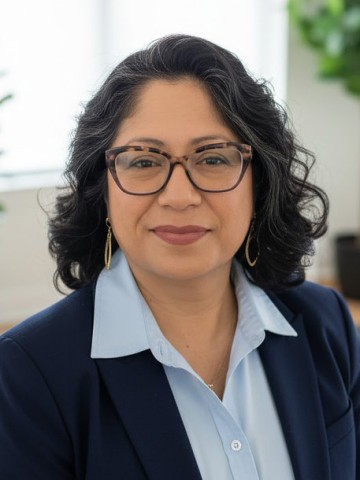
Maria Mejia-Ramirez: Coordinating Youth-Centered Social Work
When young people appear in Cook County Juvenile Court, Maria Mejia-Ramirez MSW ’05 relies on her background in social work to find the services and interventions that could change the trajectory of their lives.
Maria is a clinical coordinator with the Cook County Juvenile Court Clinic, operated by Northwestern University in partnership with Cook County. The clinic provides forensic and psychological assessments of youth charged with criminal offenses.
In her role, Maria supports and manages evaluation referrals, helping to identify the right resources to address problem behaviors and mental health issues. She also provides Spanish language assistance when conducting interviews and helping families understand the legal process.
Maria says her work is necessary for an individual’s needs to be met so they are “not overlooked or relegated to a label.”
“I’ve always been drawn to the legal aspect of children’s risk and the families that find themselves in situations that bring legal or protective services into their lives,” she said.
“It’s a path I have progressively gone down, even while I was at Dominican.”
During her Master of Social Work program at DU, Maria says she was able to learn alongside case workers and investigators from the Department of Children and Family Services who were also enriching their education. This enabled her to hear from professionals with different viewpoints and years of experience, she said.
“What I loved about Dominican was its strength-based, family-centered approach,” she added. “I do reflect on that all the time.”
Her positive educational experience rubbed off on her daughter, Viviana Ramirez ’24, who also attended Dominican, earning a bachelor’s degree in English.
“My job is not an easy one and it’s not for everyone, but I enjoy it,” Maria said. “At the end of the day, I feel I have accomplished something, even if it’s just baby steps.”
2010-Now
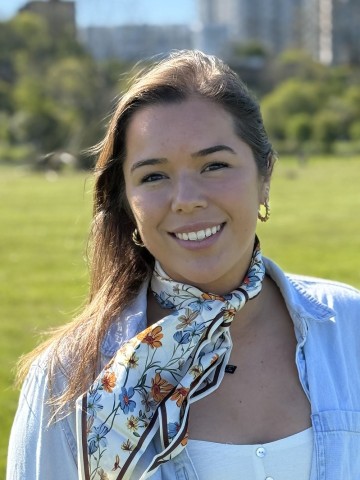
Leah Kostos: Improving Community Nutrition
A role as a community nutrition educator has allowed Leah Kostos ’21, MBA ’22 to have a meaningful impact on citizens’ health.
A registered dietician, Leah works for the Hunger Task Force, a leading anti-hunger organization in Milwaukee, Wisconsin.
With a mission of helping low-income residents improve their nutrition and access to healthy food, Leah teaches community nutrition classes at Milwaukee County Senior Centers and community organizations. Additionally, she leads community cooking classes in the education kitchen at the Hunger Task Force headquarters. Participants in these classes are low income and eligible for Supplemental Nutrition Assistance Program (SNAP) benefits, Leah said.
“I do feel like I am making an impact,” she shared. “I love making connections with people and getting the bits of feedback from them that the classes are making a difference in their lives.”
The Hunger Task Force supplies food to more than 60 pantries and other meal sites across Milwaukee County. It also runs a 200-acre farm where Leah leads nutrition classes.
Children from urban areas visit the farm’s school garden to plant, maintain, harvest and cook the food they grow.
“With the community in mind, we want to grow food that people eat and enjoy and is culturally responsive,” Leah said.
While Leah was a Dominican student studying nutrition, her view of the world—and serving others—was enhanced through a service immersion trip building houses for families in Tijuana, Mexico, and a semester of study in Salamanca, Spain, she says.
“It wasn’t just the educational components, it was the different experiences which opened my mind to think about others in a way I hadn’t before,” Leah said.