125 Years of Seeking Truth: Across of Range of Disciplines, Dominican Graduates are Unwavering in their Pursuit of Veritas
This article appears in the Fall 2026 issue of the Dominican Magazine.
Return to the Table of Contents.
In mission and in motto, Dominican University has guided countless students on the path to truth over the last 125 years.
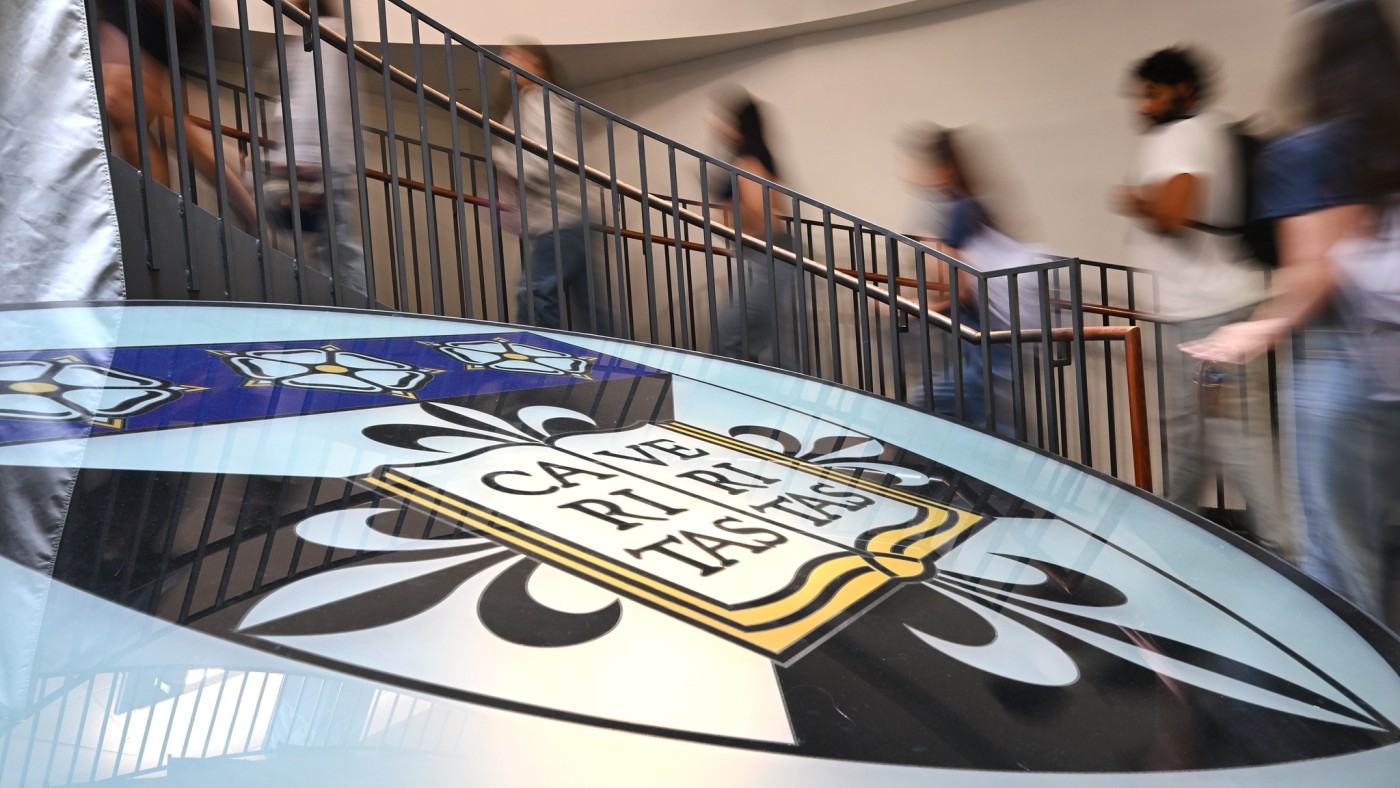
Veritas is more than just a word on a seal. It’s a direction, a call to action, a rallying cry.
For the alumnae/i featured here, truth is interwoven into the fabric of their life’s work, making it possible for them to be the changemakers the world needs today.
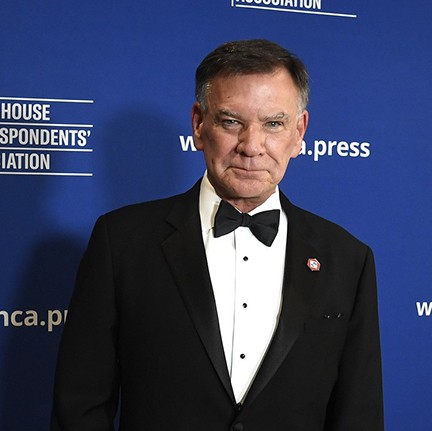
Steve Thomma: Pursuing Truth and Accountability
Truth is a way of life for Trustee Emeritus Steve Thomma ’76.
“My motto is, ‘Truth is my business,’” the director of the White House Correspondents’ Association said. “I have it framed on the wall in my den.”
Indeed, truth has formed the foundation of Thomma’s distinguished and award-winning career as a journalist.
For 30 years he reported on national politics and the White House, covering presidential administrations from Ronald Reagan to Joe Biden.
Today, as director of the White House Correspondents’ Association, Thomma plays a key role in empowering and aiding journalists to hold the president accountable to the citizens of the United States.
“My job [as a member of the press] is the only private sector job that is in the U.S. Constitution,” he noted. “They put the press in the First Amendment for a reason: to be another check and balance on government power.”
Studying journalism at Rosary College under acclaimed investigative reporter Bill Clements, Thomma learned about the fine points of uncovering truth. Clements also invited accomplished journalists to speak to students about their craft.
Amid a landscape that has seen the number of reporters from traditional print media dramatically decrease, the need to pursue the truth remains great, Thomma said.
Truth is in some danger,” he acknowledged. “There have always been liars in the government going back to the 1790s. I wouldn’t say that ever goes away, but that’s our job to find the truth and report it to people. Whether it’s some behemoth news organization or a citizen journalist, it’s a critical role and cannot be allowed to go away.”
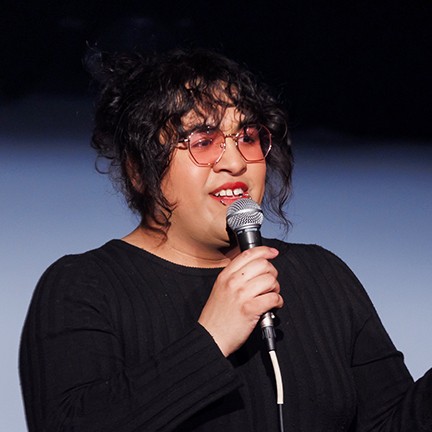
Delilah Orizaba: Counseling Others to Live their Truth
“Be who God meant you to be and you will set the world on fire.” For Delilah Orizaba ’16, MSW ’19, the words of St. Catherine of Siena, first imparted upon her at Dominican University, guide her life and her work.
“When you are who you are meant to be, when you power through that shame, you’re unstoppable,” Orizaba says.
As a licensed clinical social worker and therapist, Orizaba helps clients gain confidence to live their truth in meaningful, productive ways.
“What holds a lot of folks back from living truthfully is the possibility of feeling shame,” she said. “I think shame is at the center of a lot of the reasons people come to therapy.”
When not counseling clients, Orizaba is a stand-up comedian. That means laying bare her own truth in a quest to not only entertain, but to build greater understanding and acceptance—among the audience and herself.
“My willingness to be vulnerable on stage has allowed me to accept the parts of myself that I’m not as confident about, like being trans and having immigrant parents,” Orizaba acknowledged.
Through her comedy and storytelling based on her lived experiences, she also aims for audiences to find “something relatable in the unrelatable.”
“Many people have not met a trans person, let alone seen a trans comedian,” Orizaba said. “I do feel I’m able to help people connect with something and someone that is foreign to them.”
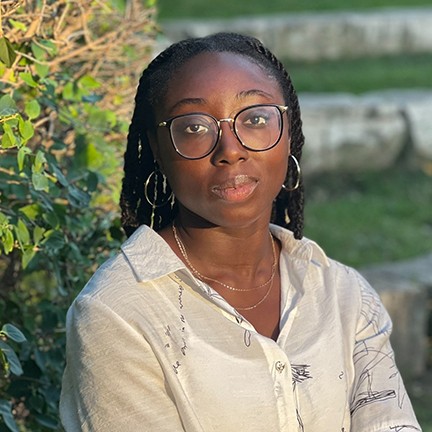
Yujay Masah: Truth in Research
Identifying the truth in history isn’t always straightforward—especially when that history involves traditionally marginalized communities.
“So much of Black history and evidence of Black life has been either intentionally not documented, intentionally destroyed or intentionally mishandled,” notes Yujay Masah MLIS ’24, a Black Studies librarian at Northwestern University. “Understanding there are going to be gaps in the official documented record when you’re doing research into Black history is very important. But you also have to know that there are ways outside those official documents to find evidence of Black life.”
Masah helps students, professors and academics find the right resources to research truthful histories and experiences. And while there are many scholarly works about Black history written by Black academics and others, not all may capture an authentic picture, Masah says.
That’s why she likes to integrate primary sources, like oral histories, objects and other records that scholars may not traditionally study. One source Masah recommends is the Shorefront Legacy Center in Evanston, an archive of media, artifacts and personal stories highlighting the Black experience of the North Shore.
Masah says her library and information science education from Dominican introduced her to skills that have benefited her work in higher education.
“Across all of my courses, cataloging and archival practice was taught,” she noted. “That helped me so much. Now, I communicate those complexities to students.”
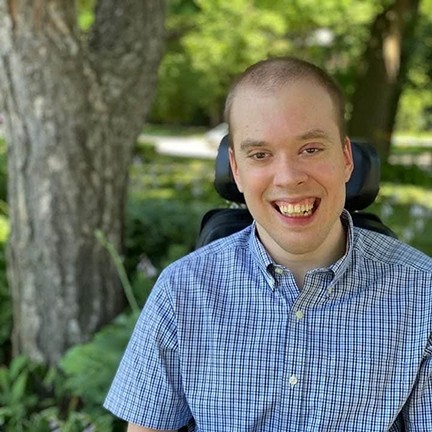
David Gayes: Using Truth for Faith-Based Advocacy
The path to truthful disability activism and theological study was carved for David Gayes ’14 during his years at Dominican.
“Dominican really helped me embrace my truth and who I was,” he said. “I felt supported to explore who I was. And I realized that the lived experiences of people with disabilities are underrepresented in a lot of spaces, including our faith communities.”
Gayes lives with cerebral palsy and is quadriplegic. He combined his interest in disability studies and theology for the 2012 Caritas Veritas Symposium when he addressed “Physical Difference and the Scripture.” He also worked with the Interfaith Youth Corps (now Interfaith America), which led him to the Institute of Theology and Disability and its annual conference where disabled theologians of all faith traditions gather to discuss disability issues and find ways to address them. He has attended nearly every conference since.
Today, Gayes, who received a Master of Arts in Intercultural Studies and Ministry from Catholic Theological Union, a DU academic partner, advocates for faith communities to “respond consistently and intentionally” to the truth of disability issues. This can be as simple as encouraging faith communities to be aware of disabled members and incorporate disabled voices, stories and messages in services, he noted.
“Disability theology and activism is not about adding programs. It’s really a mindset,” Gayes said. “It’s about welcoming everybody, acknowledging that everybody has a place at the table and a place of value. And it’s about widening that table and giving disabled people the opportunity to lead.”
Gayes also writes about disability issues and Biblical themes for faith-based publications. Sharing one’s truth openly is vital for underrepresented or marginalized communities, he says.
“There are people who may be moved to act by hearing your story,” Gayes noted.